
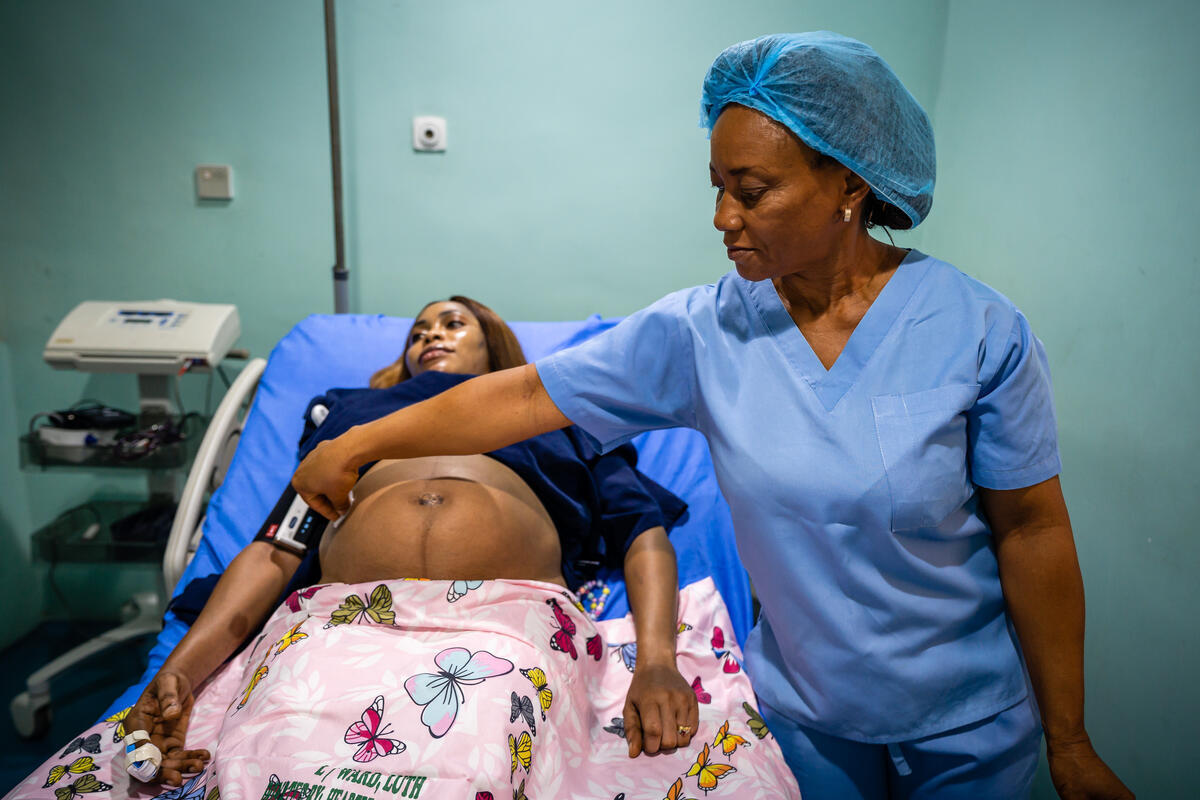
As Gates Philanthropy Partners marks its 10-year anniversary, we’re reflecting on a decade of impact in maternal, newborn, and child health—and spotlighting our partnership with HATCH Technologies to illustrate how our donors support access to lifesaving care.
Why maternal and newborn health matters now
The first few minutes of life are some of the most precious—and most fragile. The difference between life and death can come down to whether the right equipment and trained health care providers are within reach.
Our grantmaking strategy to advance maternal, newborn, and child health (MNCH) is driven by one conviction: women and children deserve to live healthy, productive lives.
Yet for millions of families, this basic standard is still unattainable.
In 2000 approximately 446,00 women died from complications due to maternal causes; this number decreased significantly to about 260,000 maternal deaths in 2023. Despite this progress, far too many moms and babies are not surviving. Today, approximately 99% of all maternal deaths and 98% of child and adolescent deaths occur in low- and middle-income countries. Sub-Saharan Africa had the highest mortality rate for newborns in 2022, with 27 deaths per 1,000 live births. And we know that when women and children are healthy and flourishing, families, communities, and entire countries thrive. The potential ripple effects of success are great.
When a woman survives childbirth, her whole family is more likely to survive and thrive. When she doesn’t, her baby has only a 37% chance of reaching their first birthday.
Advancing care through strategic partnership
Many maternal and child deaths are preventable with interventions and technologies that already exist, which is why GPP has consistently supported a range of MNCH efforts. We recently partnered, alongside the Gates Foundation, with Hatch Technologies, whose mission is to end preventable newborn deaths in hospitals across Africa. Our grants focus primarily on advancing MNCH through the distribution of medical equipment, such as continuous positive airway pressure (CPAP) devices and point-of-care ultrasounds (POCUS), in Kenya, Nigeria, Ethiopia, Rwanda, Uganda, and Tanzania. HATCH’s work stands out because it focuses on practical solutions that are proven to work.
Simple devices with lifesaving power
The CPAP is a low-cost, effective, and easy-to-use noninvasive ventilation technique for preterm newborns with respiratory distress. CPAP has been shown to reduce the risk of mortality by 48%. It can also shorten hospital stays and reduce the need for referrals to more specialized care, helping ease pressure on already stretched health systems.
HATCH also distributes POCUS devices for earlier detection of serious pregnancy-related complications, including ectopic pregnancy, when the baby is in the wrong position for birth, or when the placenta either blocks the baby’s exit or separates too early. Earlier detection can help women get the right care sooner and improve referral decisions when time matters most.
Importantly, HATCH’s model goes beyond devices alone. Its goal is to accelerate widespread access to technologies through distribution, clinical training, and technical support to healthcare workers. That kind of practical implementation support is critical for lasting impact.
Building healthier futures for mothers and babies—together
As GPP celebrates this milestone year, we are proud of what donors and partners have achieved to decrease maternal and infant deaths. However, we also know the work is far from finished. Too many mothers and newborns still face preventable risks during pregnancy, childbirth, and the first days and weeks together.
We will continue to support MNCH initiatives alongside donors and partner organizations who believe that practical innovation, smart collaboration, and sustained commitment can help create thriving, healthier communities.