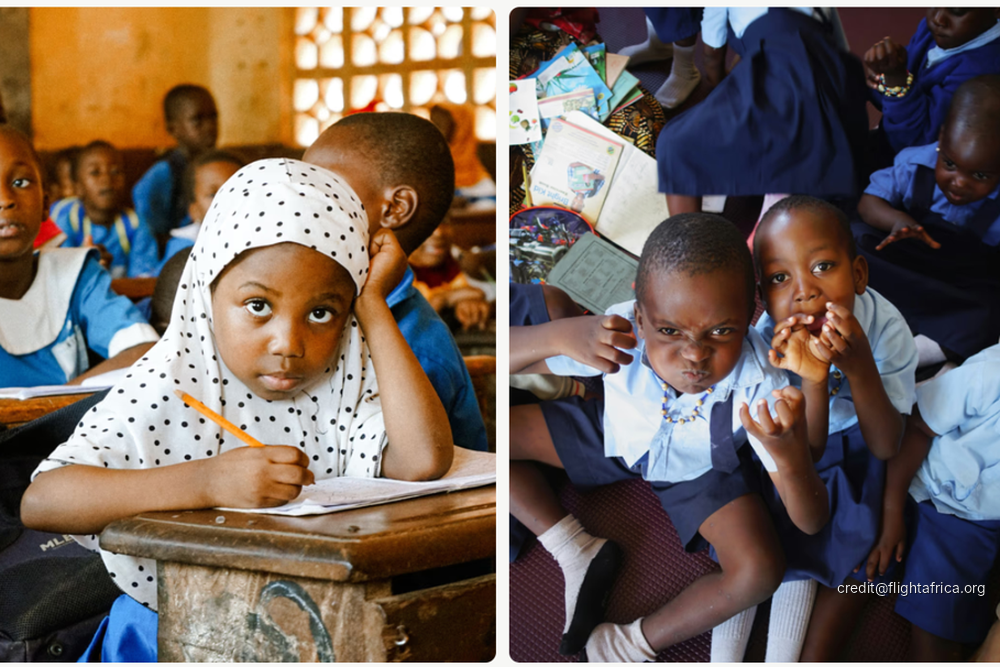
Nearly nine in 10 children in sub-Saharan Africa struggle to read by age 10, a challenge the COVID-19 pandemic made worse, according to the World Bank. Many of these children have spent years in school. They’re just not gaining the basic reading and math skills, known as foundational learning, that everything else depends on.
That’s the strange part: improving learning is no longer primarily a story about access. Over the past several decades, countries across the region have made real progress getting children into classrooms. The harder, newer question is: What happens once they’re there? And for the first time, governments themselves are treating the gap between time spent and skills learned as a priority.
A new initiative called FLIGHT, the Foundational Learning Initiative for Government-led Transformation, exists to help close that gap.
Why the gap persists
A country can invest in getting every child into a classroom, new books, and evidence-based teacher training, and still not see learning outcomes improve as anticipated. Research into why has shown the answer usually isn’t a missing plan. It’s what happens after the plan. Picture a teacher who has just received new materials and training in a new way to teach reading. There’s real momentum behind it. But once the training ends and the classroom door closes, putting a new method into daily practice is hard. Teachers’ attention is pulled in so many directions. Coaches aren’t always able to give the specific, real-time feedback teachers need. Without support in the everyday bustle, momentum can fizzle. Moving from theory and training to practice and performance can be tough.
FLIGHT is built to address the unglamorous challenge of helping reforms already designed reach more classrooms and stick around for good.
How FLIGHT works
At the center of FLIGHT is a simple goal: making sure children across Sub-Saharan Africa leave primary school able to read, do math, and further develop the skills they’ll need to reach their full potential and help their countries grow. That means cultivating excellent learning outcomes for every child in the region, not just a fortunate few, and stewarding the systems that deliver real results.
The model starts with government leadership. A ministry of education identifies its own priorities and the barriers standing in its way, and FLIGHT connects it with targeted technical assistance, drawn specifically from expertise within Sub-Saharan Africa, to help see reforms through. That support looks different depending on what a government asks for: teacher coaching, learning materials, assessments and data systems, or even responsible, AI-enabled supportive tools. FLIGHT responds to governments’ priorities rather than setting its own, and it’s designed to be fast and flexible, moving at the speed a ministry needs, not on a multi-year proposal cycle.
Behind that work sits a $35 million commitment over three years from five philanthropies and ministries of education excited about what they can achieve in partnership with FLIGHT.
Early, high-level signs of demand
FLIGHT launched this past summer, at a regional conference in Malawi that brought together 18 African ministers of education and delegations from 42 countries. In the weeks since, FLIGHT’s Executive Director Joan Osa Oviawe has already met with government leaders from 24 countries, many with concrete requests and strategies already in hand.
What this says about philanthropy
FLIGHT is also an incredible example of philanthropic collaboration. Multiple funders have set aside their own individual priorities to support a single government-led plan, rather than each running an individual program alongside it. It’s a bet that governments can best lead their own reforms, and it’s a model that could hold lessons well beyond education. Just a few months in, that bet is looking good.
This is also the kind of collaboration GPP exists to enable: pooling resources behind ideas that work and trusting the people closest to the problems to lead.
If you want to see more of the FLIGHT approach, then consider making a gift to GPP to contribute to the next groundbreaking collaboration.
And for a closer look at how AI is already being used to bolster education and improve foundational learning, our Gates Foundation colleagues go deeper in the 2026 Goalkeepers report.